

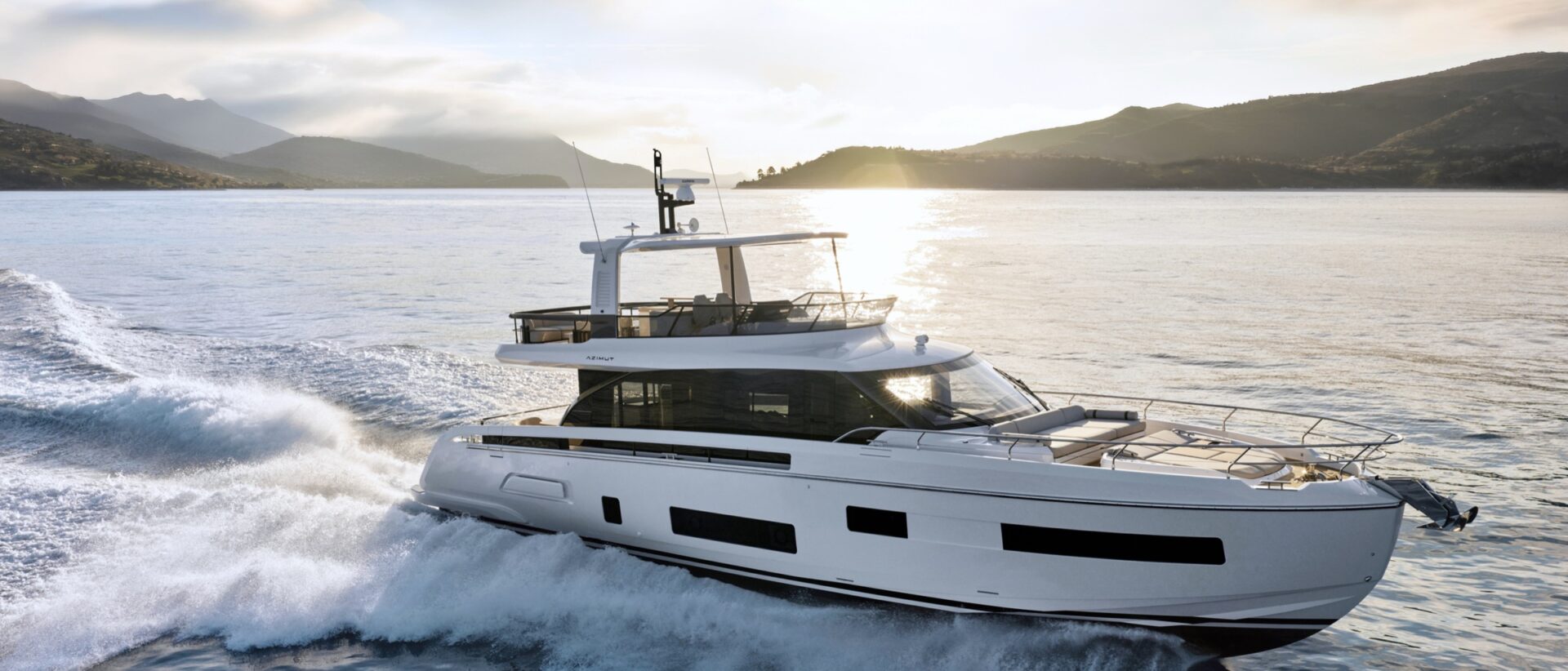
Anyone looking into Alberto Mancini Yacht Design quickly arrives at the new Azimut generation. Many current models in the Fly, Seadeck and Grande lines bear his signature. Mancini is an Italian yacht designer with his own studio. For years he has shaped mainly exteriors and lines for Azimut. For us at Yachtwerk, the authorised Azimut dealer for Germany, his work is visible every day. We see it in our showroom near Munich and at our base in Marina D-Marin Mandalina in Šibenik. It shows in every consultation, every sea trial and every handover.
In this article
Key points at a glance
- Alberto Mancini is an Italian yacht designer. For years he has designed the exteriors of many Azimut models.
- His signature is especially clear in the Fly range, for example on the Azimut Fly 72 or the Azimut Fly 78.
- Typical features are continuous window bands, a stretched silhouette and open stern areas close to the water.
- Yachtwerk advises on all current ranges in the showroom near Munich and at Marina D-Marin Mandalina, Šibenik.
- Current prices and technical data are available on personal request, as every configuration is different.
Alberto Mancini Yacht Design: who the designer is
Alberto Mancini is one of the well-known names in Italian yacht design. For years he has drawn exteriors and concepts for Azimut. His work is not a solo effort but the result of close exchange with the shipyard engineers. Those interested in Alberto Mancini Yacht Design usually ask about one point. Why do the new Azimut models differ so clearly from their predecessors?
The answer lies in a deliberate break with the classic flybridge look of the 2000s. Mancini works with flowing transitions between decks. He reduces visible steps and relies on large, continuous glass surfaces. Fragmented window strips disappear. You feel this on board, not just in photos. On sea trials in Šibenik, the light in the saloon is usually noticed first, followed by the side view to the water.
The design language behind the new Azimut lines
The design language can be identified by three recurring features. They appear across many current ranges. First, the hull windows: instead of individual portholes, a continuous glass band structures the hull side. Second, a gently sloping roofline from bow to stern. It visually stretches the yacht without changing its length.
Third, and often more important for the buying decision, the reorganisation of space around the stern. On many newer models the stern moves closer to the water. Bathing platform and cockpit merge into one area. The idea comes from smaller ranges. It can now also be found in the flybridge segment, for example on the Azimut Fly 68 and the Azimut Fly 72.
Material choices and surfaces as part of the design
An often underestimated part of the design is the choice of interior materials. Azimut coordinates it closely with Italian interior studios. Light oak tones, matt surfaces and restrained metal accents replace the high-gloss veneers of older generations. In our showroom at Motorworld Munich we discuss materials and specification using concrete examples.
At Azimut, exterior and interior often come from different hands. Mancini shapes the outer form and the proportions. For the interiors, the shipyard brings in its own interior studios depending on the model. This explains why two yachts with a similar silhouette can feel very different inside. Buyers should therefore look at both levels separately. The exterior line determines presence and deck layout. The interior decides the atmosphere and everyday life on board.
Azimut Fly 70 design: one model as a blueprint
The new Azimut Fly 70 shows the current design language particularly clearly. That is why Azimut Fly 70 design often serves as a reference for how the flybridge yacht has changed. Today the Fly family includes the Azimut Fly 62 and the Azimut Fly 78, among others. The Fly 70 sits in the middle. Typical features are a generous upper deck and a clear separation of crew and guest areas.
What stands out is the stretched silhouette with large glass surfaces. It shapes the yacht’s presence at the dock and makes it look calm despite its size. On a sea trial in the Adriatic, other things count. Around Šibenik the Maestral often picks up in the afternoon. That is when you see how well a yacht can be controlled when berthing.
The flybridge as a second living space
A central element of the Fly line is the upgraded upper deck. It is no longer just a helm station but a full living area. A lounge, dining area and, depending on the model, a second outdoor galley fit up there. Earlier generations offered this at most in part. You will find configuration and specification on the respective model page in the Yachtwerk portfolio. We provide current prices on personal request.
Would you like a personal consultation?
Seadeck, Magellano and Grande: one design language, three characters
It is remarkable how different the characters within one design language turn out. The Seadeck range stands for the open concept, for example as the Azimut Seadeck 6, Azimut Seadeck 7 and Azimut Seadeck 9. Interior and exterior merge almost seamlessly on the main deck. The focus is on outdoor space and closeness to the water.
The Magellano line takes a different approach, for example on the Azimut Magellano 25M or the Azimut Magellano 27M. Its hull concept is designed for longer passages and rougher seas. Here the look deliberately takes second place to seaworthiness and range. The brand still remains recognisable. The proportions appear more robust and suit the long-range philosophy.
At the top end is the Grande range with the Azimut Grande Trideck, the Azimut Grande 26M and the Azimut Grande 30M. These flagships show that the design language works in large dimensions too. The large, vertical window surfaces recall contemporary architecture more than classic yacht building.
The sporty side: the S-Line and Atlantis
The sporty segment follows this line as well, for example with the Azimut S7 and the Azimut S8. Here a flatter silhouette with a lower freeboard dominates. The Atlantis range complements the offer as an entry into the sport coupé world. These models are aimed at owners who drive themselves. Direct handling matters more to them than large deck areas.
What design means for the buying decision
Many prospective buyers start with the looks. In the end, however, the decision often comes down to details that follow directly from the design. Where is the outdoor galley? How wide are the side decks for going ashore? How well can you see the bathing platform from the helm? Such questions are closely linked to Alberto Mancini Yacht Design. They are best answered during a real viewing.
This becomes particularly clear in the waters around Šibenik. Anyone taking a sea trial at our base in Marina Mandalina in Šibenik experiences design in action. For example during a tight anchoring manoeuvre off Zlarin or when berthing in front of the D-Resort Šibenik. Moments like these often say more than any brochure.
Design and value retention
When buying a yacht, design is also a question of time. A yacht often accompanies its owner for many years. Calm, clear lines generally age better than fashionable details. This can play a role when selling later. We deliberately do not give reliable forecasts on resale value. Care, specification and market conditions ultimately weigh more than looks alone. Anyone choosing a model should therefore focus above all on their own use. Good design supports that use instead of limiting it.
What does an Azimut yacht cost?
The price of an Azimut depends heavily on the range, length, engines and specification. The spectrum runs from the entry segment to the flagships of the Grande range. We deliberately do not quote flat prices, because every configuration is calculated differently. You will receive reliable, current figures in a personal conversation via our contact page.
Which Azimut range suits which cruising ground?
For the Adriatic with its many bays, the Fly and Seadeck ranges are particularly well suited. They make switching between cruising and anchoring easy. For Atlantic crossings or cruises in Northern Europe, the Magellano line is often the better fit. The final choice depends on your usage profile. That is why we discuss this question personally.
Financing, delivery and after-sales at Yachtwerk
Our support does not end with the signature. Delivery, financing and a later refit are part of it too. Yachtwerk accompanies clients through every phase, from the first sea trial in Šibenik to annual maintenance. Details on financing, delivery logistics and refit can be found on our services page.
In charter we work with partners such as Splendid Yachting. This allows owners to charter out their yacht outside their own usage periods. Our partners page gives an overview of our collaborations. More about our history as an authorised Azimut dealer can be found on the About Yachtwerk page.
Italian shipyard heritage as a hallmark of quality
Azimut continues to build its yachts in Italy. The group is headquartered in Avigliana near Turin. Design team and production work closely together. Short distances allow detail improvements to flow quickly into series production. Find out more about the shipyard on the official Azimut Yachts manufacturer website.
Frequently asked questions
Who is Alberto Mancini?
Alberto Mancini is an Italian yacht designer with his own studio. He has worked closely with Azimut Yachts for years. Many current models in the Fly, Seadeck and Grande lines bear his signature.
What sets the design of the Azimut Fly 70 apart from older flybridge models?
The Fly 70 features a stretched silhouette, generous glass surfaces and a flybridge as a second living space. Cockpit and bathing platform move closer together than on older generations. This is especially noticeable during anchor stops in the Adriatic.
How can you recognise an Azimut in the current design?
Typical features are continuous window bands in the hull side and large, continuous glass surfaces in the saloon. Add to that a stretched silhouette with a gently sloping roofline. At the stern, cockpit and bathing platform sit close to the water. These features appear to varying degrees in most current ranges.
Can you take an Azimut yacht on a sea trial in Croatia?
Yes, Yachtwerk offers sea trials at our own base in Marina D-Marin Mandalina in Šibenik, provided the model is available there. The area is suited to both: handling in open water and anchoring manoeuvres in sheltered bays such as off Zlarin.
Can you experience the design live before buying?
Yes. In our showroom near Munich we discuss models, plans and specification in a personal conversation. If you want to experience the design on the water, you can arrange a viewing or sea trial in Šibenik. Boat shows such as boot Düsseldorf also offer an opportunity to compare current models directly.
How does the purchase and delivery of an Azimut yacht work?
After model selection and configuration, Yachtwerk supports you through ordering and financing questions. We then organise the delivery from the shipyard in Italy to your chosen home port. We discuss process and timing individually in a personal conversation.
Can an older Azimut yacht be retrofitted with the current design?
Hull shape and window layout are fixed at the factory. A conversion to the new design language is therefore not possible on existing yachts. Interior, surfaces and technology can, however, be significantly modernised as part of a refit. We clarify the details in our service area.

Ernst Nassl
COO – Sales & Marketing — Yachtwerk, authorised Azimut dealer
Many years of experience in the yacht market. Your personal point of contact for new yachts, financing and strategic advice.


